
Giving Historic Spaces a Future
Historic churches are among the most demanding environments in which to work. Every decision is scrutinised against conservation requirements, budgets are hard-won from donations and grants, and the buildings themselves rarely behave as expected once work begins. Over a number of years, Coulon Stone has carried out restoration and improvement work across several Grade II listed churches in the Chilterns, including Holy Trinity in Bledlow, All Saints in High Wycombe, and St Mary's in Hambleden.
The Brief in each case, was the same in essence: to bring these buildings into genuine everyday use without compromising their historic integrity.
The Materials
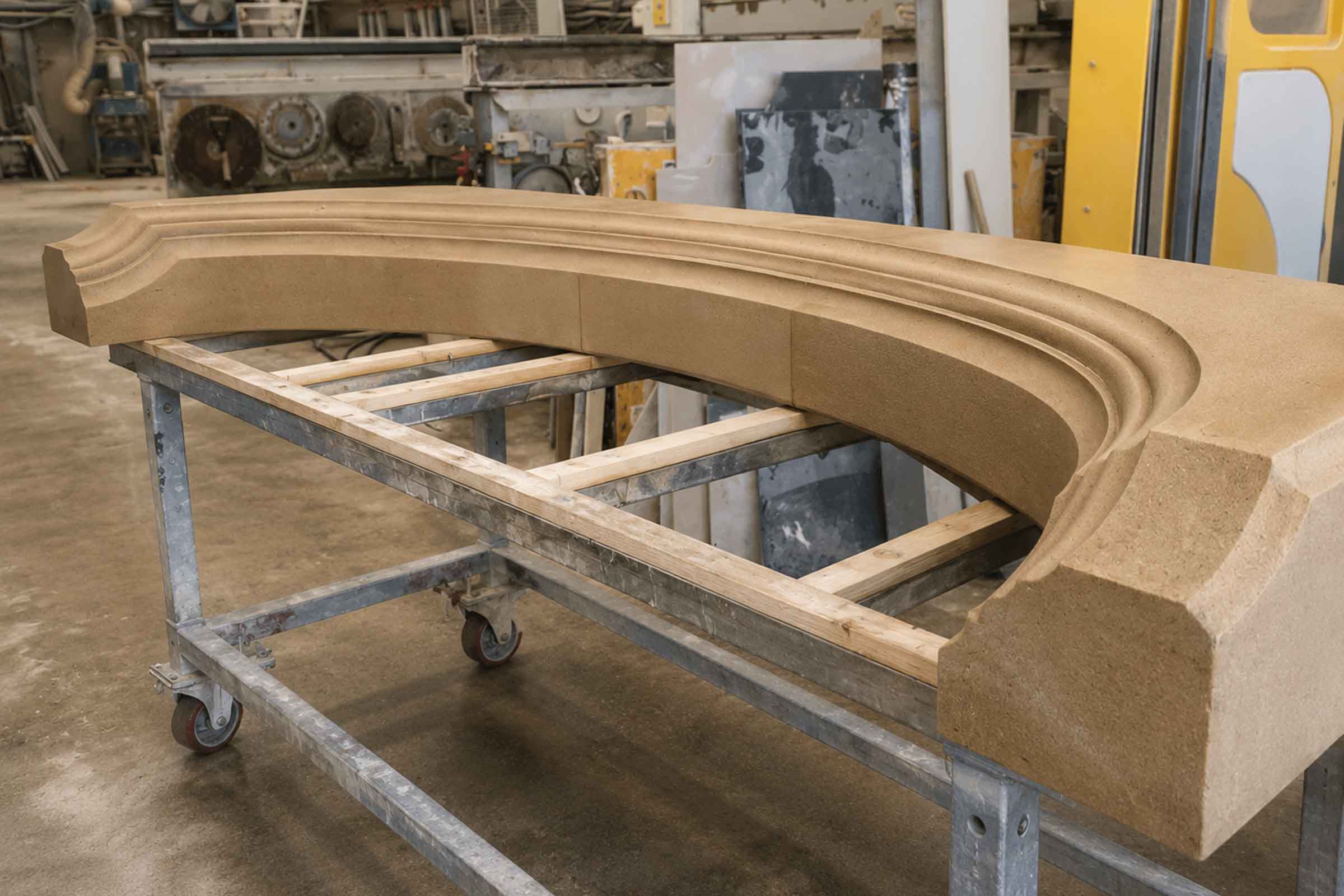
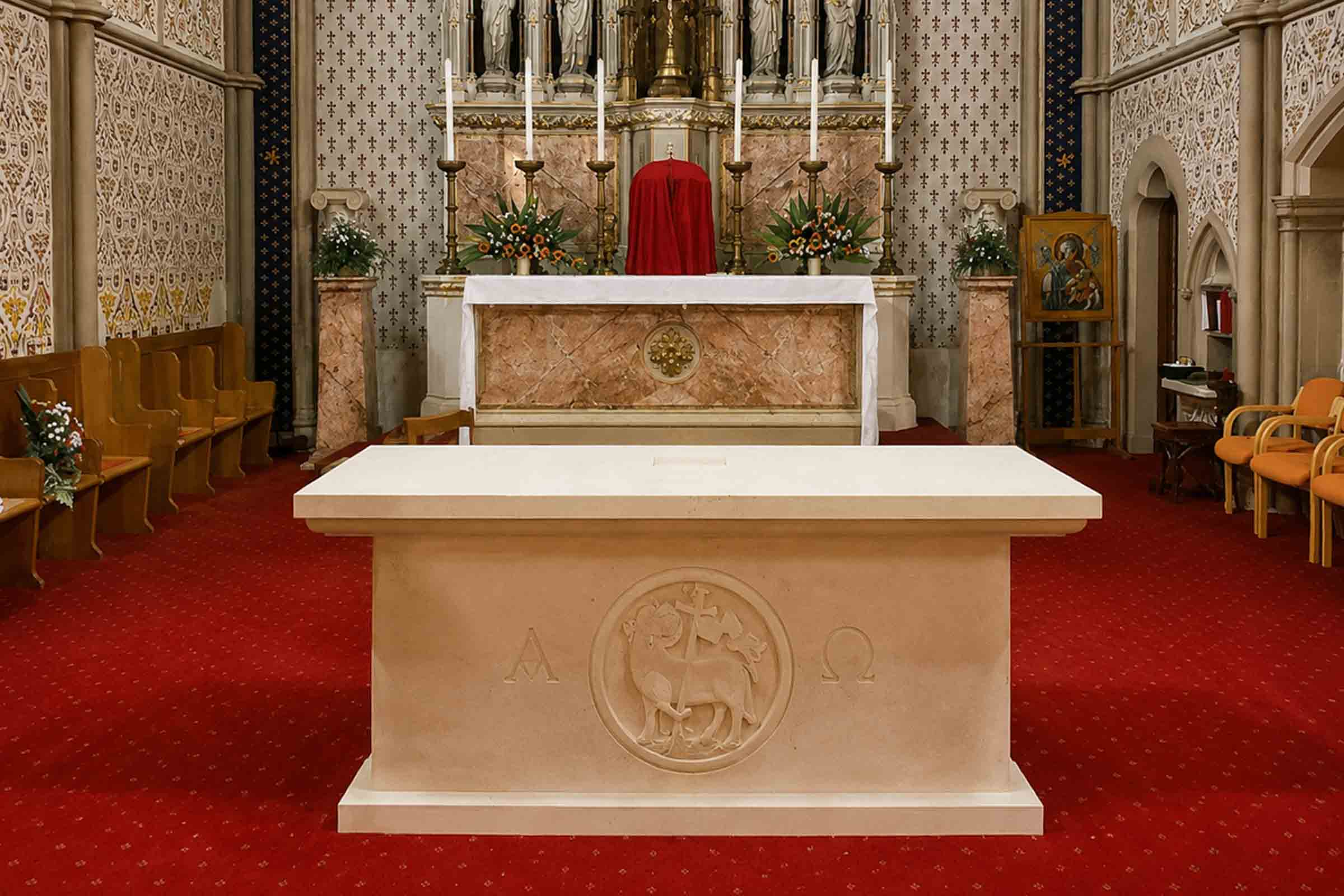
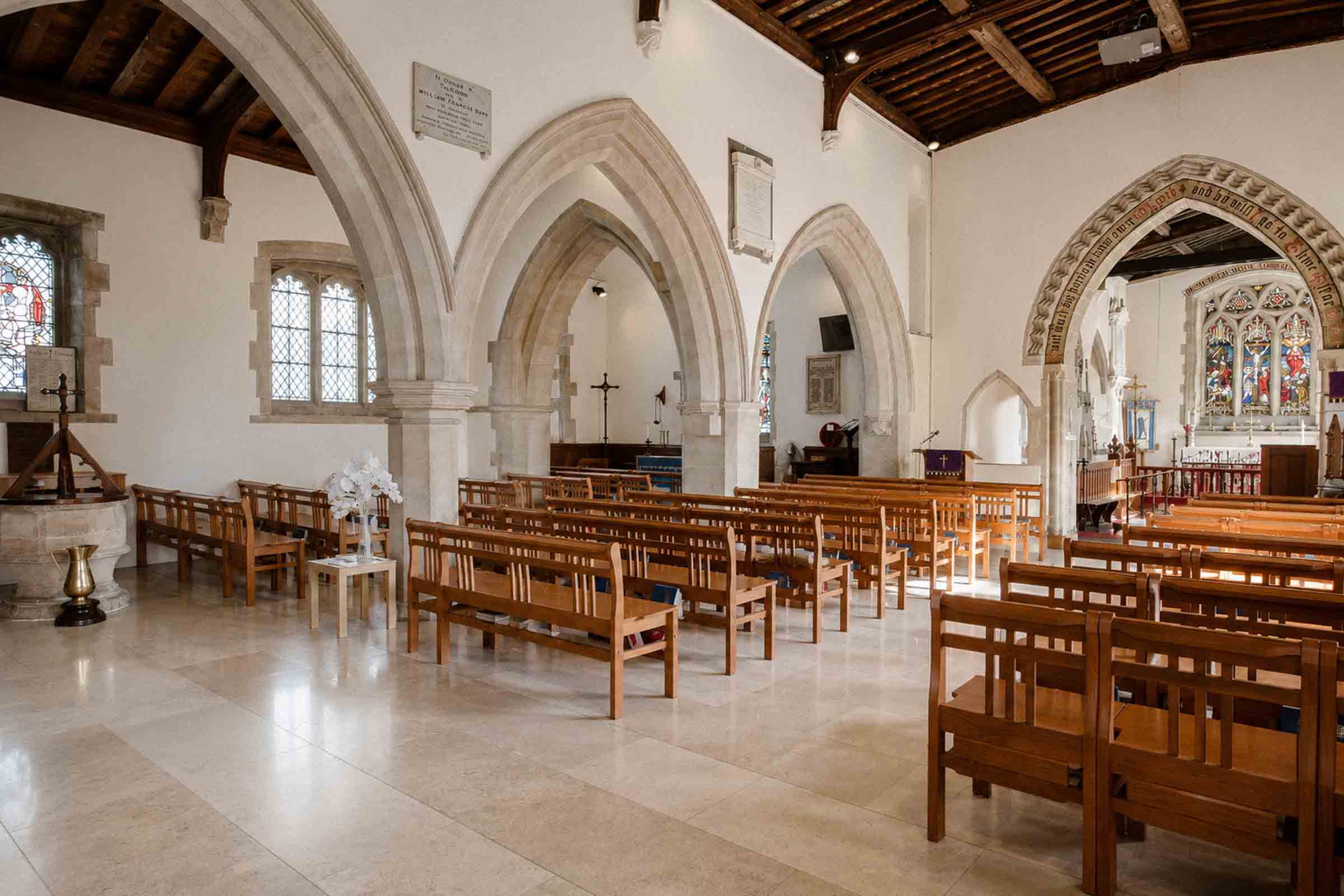
Stone selection was guided by both conservation requirements and practical function. Azul Valverde and Gascoigne Blue limestone, imported from Portugal, were used for floor installations. Bath stone was specified for altar and lectern work in Birmingham. Portland stone was used for disabled access ramps and structural repairs, and handcut keystones were fabricated for arch restoration. In each case, the material was chosen to be sympathetic to the existing fabric of the building.
The Work
The scope varied across projects but covered a wide range of specialist work. Floor installations involved removing failed suspended timber floors over historic voids, laying insulation and underfloor heating systems, and finishing with precisely cut stone laid to conservation-approved drawings. Structural work included repairing a collapsing arch with a handcrafted replacement keystone, rebuilding collapsed floor sections by injecting foam into the voids beneath, and reinstating Portland stone steps and surrounds. In one church, a stone cross was made as an exact replica of the original. In another, a new Bath stone font, altar, and lectern were fabricated and installed from scratch.
The Challenge
Listed building constraints mean that every intervention must be carefully justified and documented, typically through a specialist conservation architect. Budgets are fixed and firm; there is no contingency, and no possibility of going back for more once a price has been agreed. Perhaps the most unpredictable aspect of working in historic churches is what lies beneath the floor. Voids under the original suspended timber were frequently occupied, and whatever was discovered had to be handled with discretion to avoid halting the project. The team learned to move carefully, work quickly, and say little.
The Result
Each church emerged from the work as a genuinely usable space: warm, structurally sound, and open year-round. Where previously the buildings were too cold or too damp for much of the year, they now host children's groups, community organisations, and local gatherings on a regular basis. The historic character of each building was preserved throughout; the stonework sits within its setting as though it has always been there.